It’s real easy to get going on a project right up until you hit a barrier. Then you find yourself with a burnt out part and no replacement and the wires are a mess and you end up so frustrated that you toss the works.
Here’s some pointers to make the process a little more electrifying and a little less upsetting.
Buy at least two of everything
It’s highly likely you will let out the magic smoke and create a giant stinky mess.
It’s even more likely that you will silently blow a part. I can go for years and years in between letting out the magic smoke but I’ve definitely put 5v into a 3.3v part accidentally and it didn’t look like I did anything wrong, it just stopped working.
Nothing sucks more than having to urgently order an escoteric part and having your project stalled for the duration.
Thus, you want generally two of everything. If you are ordering off of Digikey or Mouser or another such site, there’s generally a price break where it gets cheaper.
Buy jellybeans in bulk
There’s a bunch of parts they call “jellybean” parts because they are like a bin of jellybeans where you don’t really keep count. These are things like resistors and capacitors in common values. It turns out that for most jellybean parts, a lot of the cost is the labor of counting out the requisite number of them, so buying them in bulk can be quite cheap. So usually I get a strip of 10 or 20. 0603 parts are usually super-cheap and often times I’ll just get 100 of them since they are tiny and cheap.
Breadboard/Prototyping config
When I’m having at least two of everything, I tend to leave one of them in breadboard config, designed for maximum flexibility for testing things out. This means that it has stackable headers, nothing done irreversibly, etc.
A lot of boards have a primary row or pair of rows of pins, which is intended to be the main breadboard axis. If there are any pins that would get in the way for plugging them into the breadboard, I’m going to use put those headers so they stick out of the opposite side of the breadboard, so that I can run cables in from the top. If it’s the connectors at the end, sometimes I’ll use a right-angle header, especially for things like the FTDI port.
If I need to make things small, I’ll generally repeat the whole thing but this time with things soldered directly down, etc.
Avoid desoldering
Desoldering sucks.
I’m good at soldering by hand, and I still hate desolderng.
And, obviously, you can’t avoid it all of the time. However, it’s good to think through how you want to avoid desoldering with connectors in the right places, etc.
WLED and CircuitPython
If you are doing LED strip projects, starting out just running WLED is a great time-saver because everything’s mostly there in a browser and it’ll just work. Even if you intend to switch to something custom-programmed, it’s still better.
Similarly, it’s nice to run CircutPython or MicroPython or another environment where you can just get a command line interface over the USB or serial port and get things working quickly, even if you intend to replace it with an Arduino or other more custom firmware later on.
Multimeter
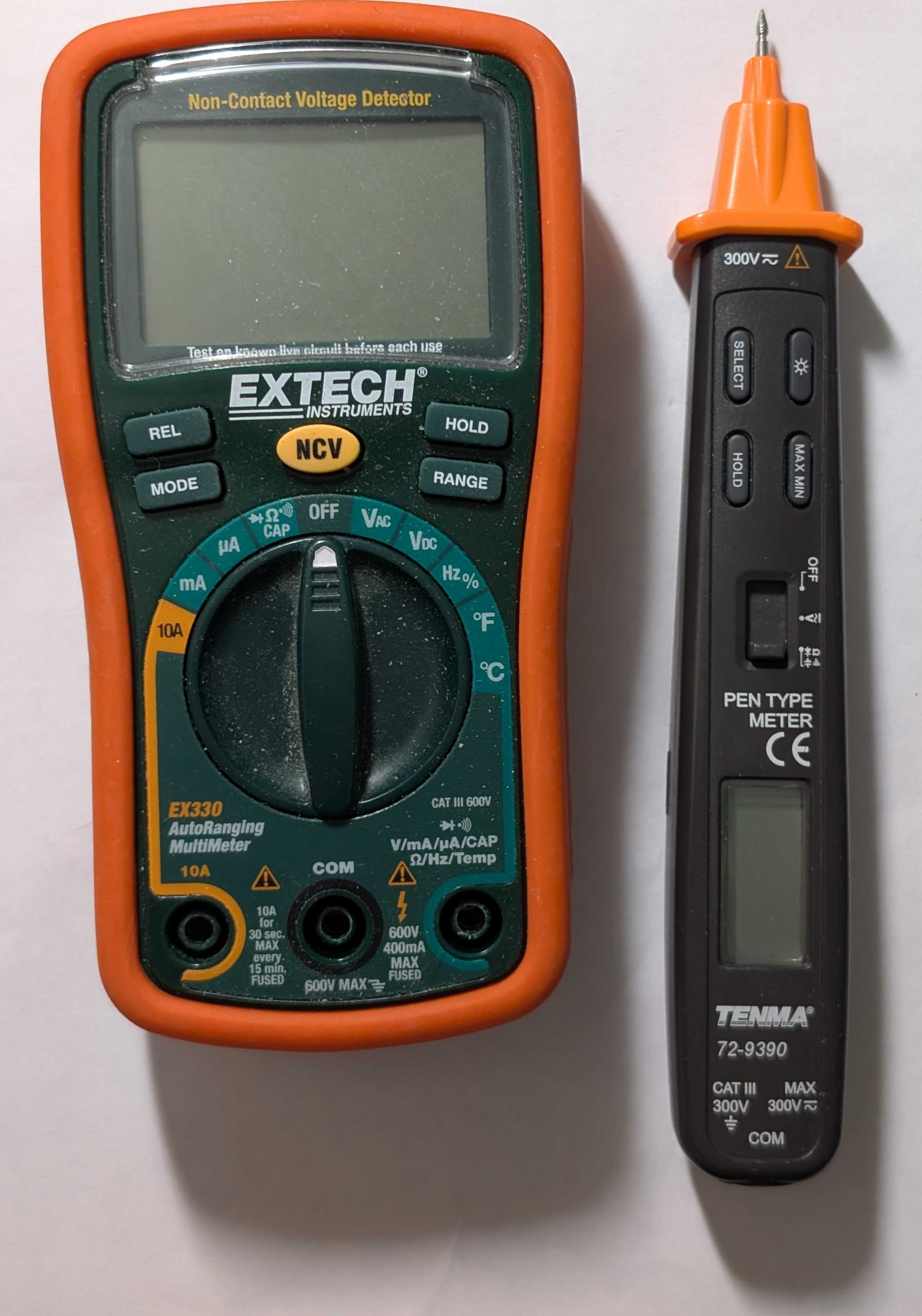
You need a multimeter.
I’ve got three. Four if you count the one in my oscilloscope. I’ve got a big chonky one, plus a pen-shaped one, plus the emergency backup one that I hate because it doesn’t have a continuity check mode that beeps.
Some tutorials will skip out on this, but the second someone’s telling me that their project doesn’t work, I’m probably going to ask them to probe for shorts or breaks so anybody who tells you that you don’t need a multimeter is doing you a huge disservice.
My dad worked as an aeronautical engineer until he retired and when he was in college, one of his summer jobs was assembling TVs on the Motorola production line. He’s the one who taught me soldering and the way he taught me was strictly correct, including heating the part not the solder, etc.
Aeronautical engineering is one of the more unforgiving kinds of engineering. One of the things he taught me was that when you solder something down, you always want to probe everything it connects to to make sure that it matches the schematic. So if I soldered down a resistor, verify that the resistance value matches, while measured from all of the places I’d expect to see the resistor. If I soldered down a wire, I put it in continuity check mode to make sure that it beeps everywhere it’s supposed to beep.
This has saved me a bunch of problems over time.
The leading cause of zapped multimeters is when you try to measure amps, by the way.
Also, it’s really really handy to have good leads and more of them. My chonky multimeter spends a lot of time measuring amperage on a fixed circuit so I get a lot of use out of my connectors that have a banana plug that goes straight into the multimeter on one side and a micro-hook on the other. My pen-style multimeter is the one that I use to really poke around a circuit.
Aligator clips and Mini-Hooks
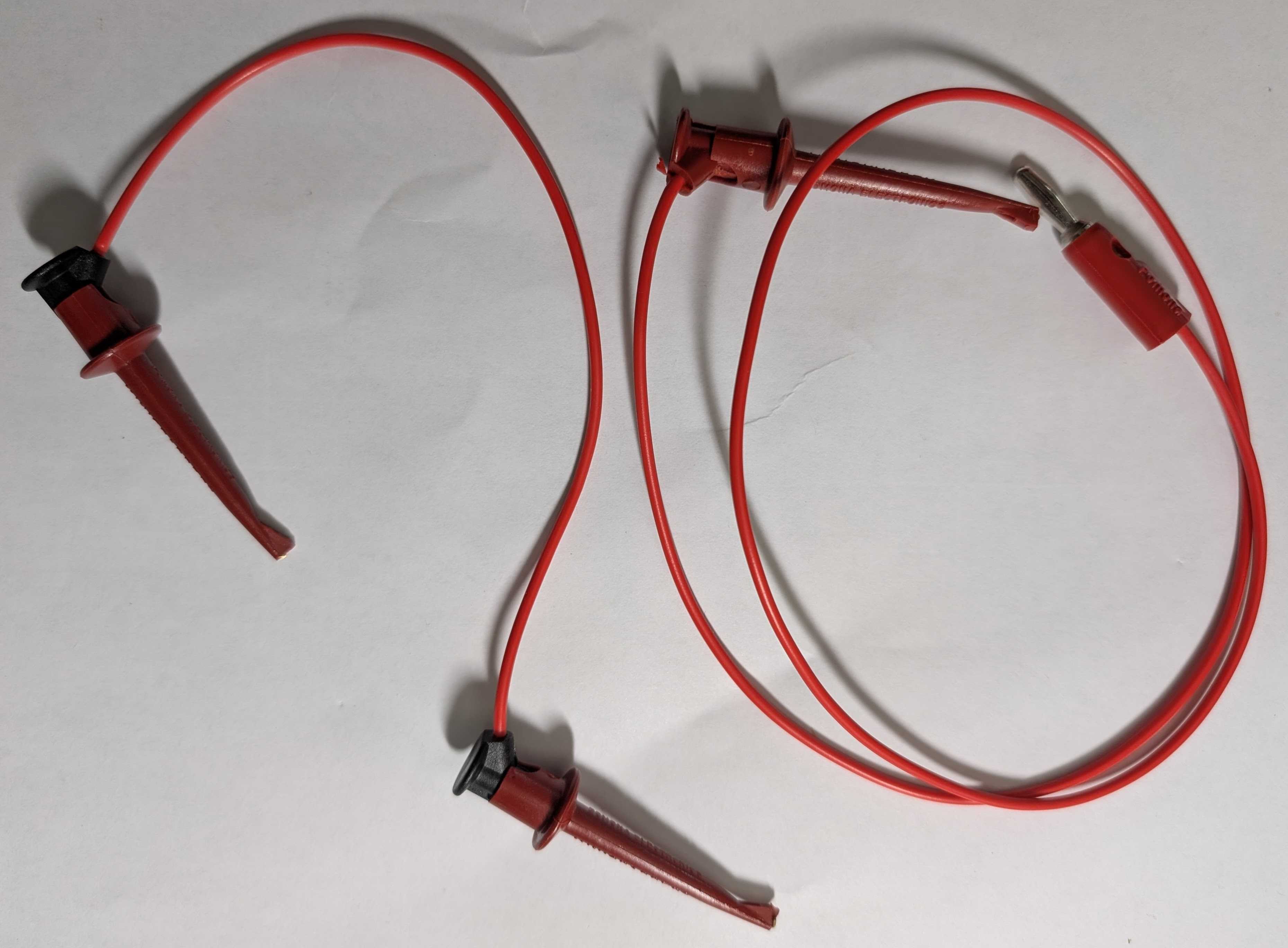
There’s a bunch of different connector types for temporary connections.
Banana plugs (your multimeter has banana plug sockets) are nice but kinda chunky.
People used to mostly just use aligator clips. They come in various sizes for different amounts of power and for stuff that’s bigger and chonkier they are great.
On the other hand, mini-hooks and micro-hooks are able to clip onto pins for IC chips and they tend to be better protected against accidental shorts.
Breakouts and stuff
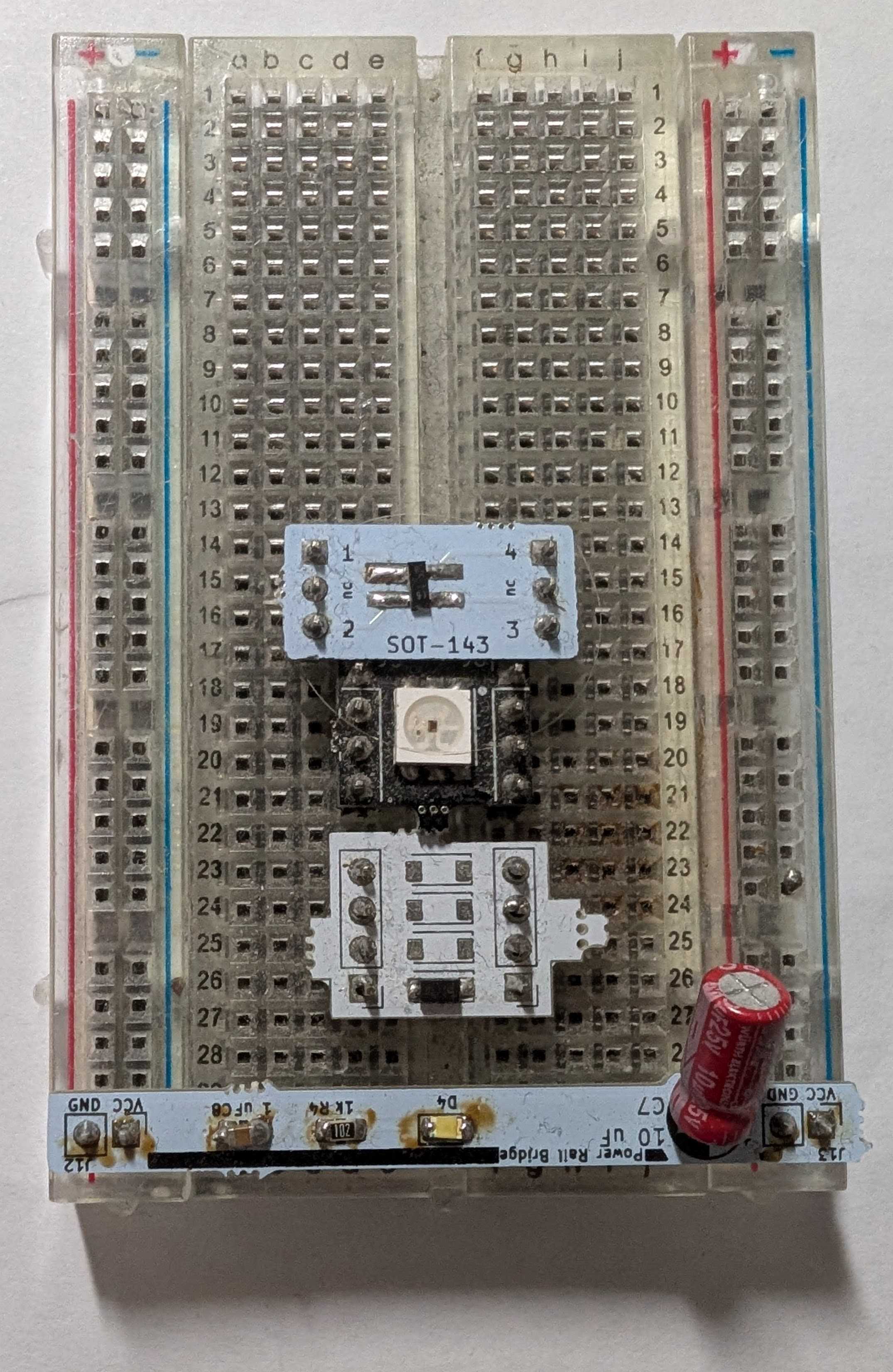
There is absolutely no reason why you can’t do the same sort of thing that companies like SparkFun and Adafruit do and make your own breakouts.
One side advantage is that if you have everything worked out for a breakout, you can quickly make the same circuit work for a final PCB.
You can make your own perfboards
I lowkey hate the standard perfboards. There’s the cheapest and nastiest perfboards that are one-sided patterns atop phenolic resin substrate. but you can get really cheap double-sided perfboards with FR4 substrate these days. And you can get “breadboard style” perfboards that actually make life easier most of the time, except that you inevitably end up with something that doesn’t quite fit either way.
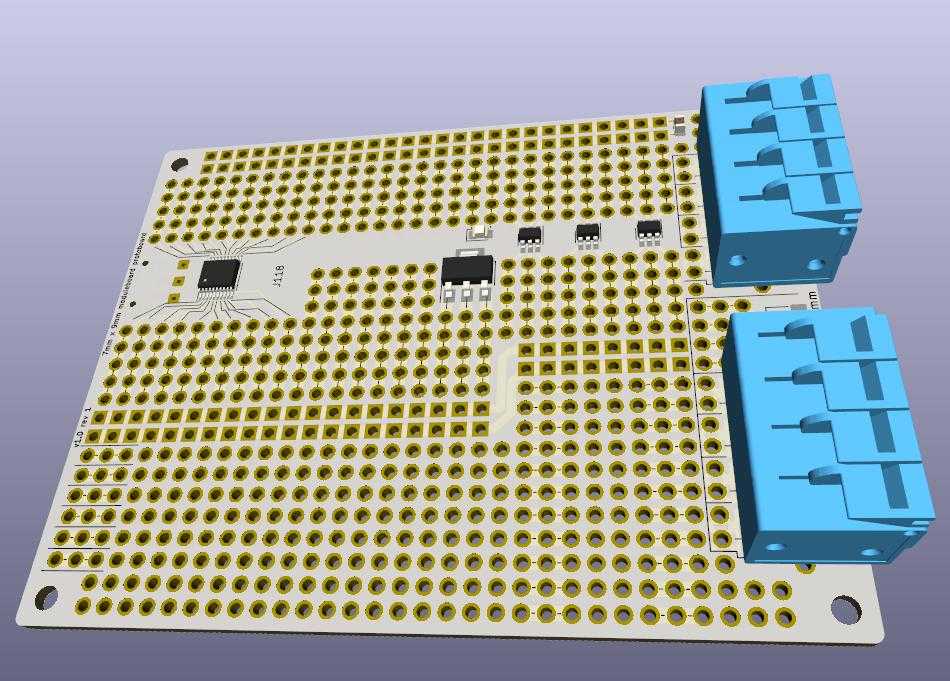
I have a set of perfboards that end up having the parts and shapes and patterns that seem to work for me and they work so much better, complete with a wider section that you can mount a Feather/BluePill/Teensy/Et al.
Semi-prototyping
There’s a bit of a boundary between designing a breakout and designing the complete project in one go and in between is a semi-prototype, where you fab a board specifically designed to be an intermediate step.
This lets you avoid having a seriously giant breadboard or perfboard project. It might have all of the bits for the circuit but organized such that you can alter everything. Or it might be most of the project with a perfboard section to get the rest of it done.
Always have two ways to do something, especially with power
Especially when you are building things out of a few modules or breakouts, it’s really useful to have a second way to do everything such that you can pull each module out of the puzzle when you are debugging it.
If it’s designed to have an integrated battery, still keep some terminals that you can bypass the battery and power the board directly.
If you are sizing power supplies, maybe get the physically larger but guaranteed-to-work version as well as the one that’s smaller.
If there’s a couple of different approaches you might take to a problem, sometimes it’s best to prototype each of them.
Double check your voltages
There are a bunch of ways that wiring and voltages and power supplies can go wrong.
Thus, it’s vitally important that before you connect up a power supply for the first time that you probe it to make sure that the ground wire is what you expect it to be and the voltage is in the range you expected it to be.
Keep notes
I keep an electronics journal organized by dates to record things that happen.
Sometimes it helps to go backwards and figure out what I tried in the past. If I’ve tried a few different ways to accomplish something, it’s nice to write down my results and what I tried so that I can go back to it and not need to remember what I did.